
How to Easily Generate Powerful Testimonials That Won’t Accidentally Kill Your Sales
In this post on business testimonials you’ll discover:
- One of the costliest mistakes made with testimonials and how to avoid it
- What testimonials and fingerprints have in common
- What you must provide your customers to get quality testimonials from them
- Why the timing of testimonials is crucial
- What a customer’s testimonials MUST contain to be effective
Does your business leverage your business testimonials to their fullest potential?
As you know, generating a steady stream of new testimonials can be both one of the most profitable assets for business, and one of the hardest to do properly.
Why should this matter to you?
Because without quality testimonials, many of your prospective buyers won’t know if they can trust your business to deliver on what you’re trying to sell to them.
Word of mouth reviews and testimonials from happy clients are sales gold for your business.
However, you may not also realize that if executed incorrectly, testimonials could destroy you sales hopes. Your prospects are already on high alert for deception and red flags; whether they realize it or not.
The natural fear of being scammed, ripped off, or having a horrible buying experience is notably greater now with the increased usage of online shopping sites and services.
More and more of your prospects are becoming knowledgeable on the need to do proper checking of businesses before doing transactions with them. Will you pass this test?
Here’s an example of a website leveraging the power of testimonials:
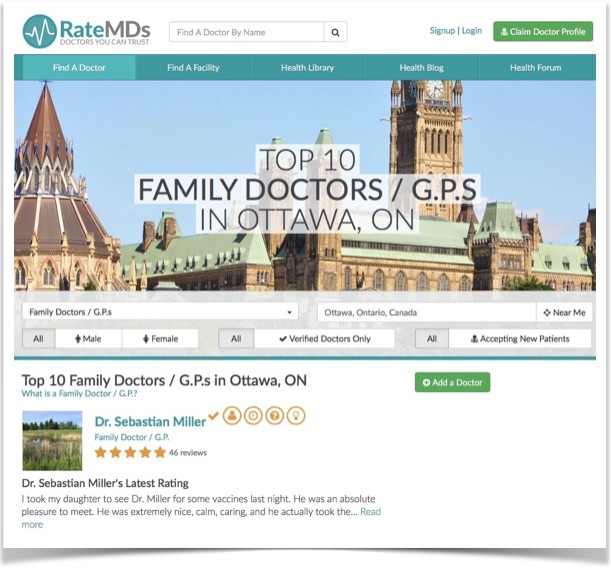
Failing to have quality testimonials could not only cause you to lose sales but could also lead to generating even more low-quality testimonials as your existing clients look to them as examples.
A very expensive downward spiral of lost revenue for your business.
However, keep reading to discover exactly how to use this to your advantage to not only generate an increase in sales but to steal market share from your competition…
This entire premise revolves around leveraging the successful strategy of implementing proof in your marketing efforts, and the most efficient way to go about obtaining quality testimonials, so you can…
Here’s why this is important:
According to Neilsen, 77% of people surveyed made purchases based on the recommendations of friends and family.
And in that same study, a whopping 66% made buying decisions based on the recommendation from a professional expert.
According to a research study by Market Force, 81% of U.S. online consumer’s purchase decisions are influenced by their friends’ social media posts on a business they dealt with.
What does this mean for your business?
It means that your prospective buyers need to see recommendations from those they feel they either can relate to or who are considered credible experts to vouch for what you have to offer.

Would you trust the credibility of a testimonial delivered by a person similar to the one shown in the above image?
What about feedback from a person only listed as “D.W. from Canada”?
Probably not.
Many businesses give exactly this impression with the vague nature of their testimonials or who is providing them.
Does your business do this? Do you know one that does?
If so, be sure to stop this immediately!
If you’re looking to improve your current marketing efforts and sales numbers, then you need to reconsider your use of social proof in the form of testimonials in your marketing.
In fact, when I’m working with clients, I have often found they make very similar mistakes based on following outdated marketing myths.
(NOTE: Want to learn a powerful strategy I show my clients to quickly get more leads from your marketing efforts? Access the free guide by clicking HERE)
With just a couple of tweaks, you too will be able to experience a significant boost in your results.
What were some of these mistakes?
The following are just some examples:
– The belief that all testimonial feedback are created equal. Most, as I mentioned previously, are too vague and generic. What did they have a positive experience with vs. just saying “the service was great!” or the “product was great!”
– Failing to realize that testimonials are like fingerprints. Each one should be unique to that individual’s unique situational needs and experience. Again, this makes them more personal and credible.
– Another common mistake is failing to properly direct people on the exact feedback you’re looking for from them. Don’t just leave it to them to think of some “nice things to say.”
– Also, springing the request for testimonials on customers without giving them the ability to consider their experience with your business.
Your marketing should reflect the same compelling message you would say if you were sitting in the same room with your prospective buyer.
In this case, it’s vital that you remember the following:
A testimonial is any written, visual, or audio statement that supports the credibility of your business and your ability to deliver what you promise.
In this case, what you’re trying to replicate with your marketing is the same credibility that would be gained if someone had been talking to your prospective buyer face-to-face, and told them of their great experience with you in solving the same issue the prospect is having.

Imagine one of your friends having a great experience at a restaurant, or with a contractor they hired to renovate their home…
And then when you mentioned you were looking for a great restaurant, or to hire a business to renovate your home, they told you about the experience they had searching for a similar solution.
They would then also comment on how happy they were when they came across XYZ Company and the results they delivered.
THIS is what you want to replicate with your testimonials.
Such an approach is what sets a great collection of powerful testimonials apart from those that are generic, credibility killers.
So how do you best accomplish this task?
The following is a solid 3-step strategy to generate the best results:
1) Set the stage in advance, before a purchase is even made. Let customers know that your business thrives based on the feedback you receive from them. Let them know you’ll follow up in the future to ask what they enjoyed about doing business with you, and what needs improvement.
2) Follow up shortly after the purchase to ensure the quality of service before (and during) the sale, along with the result, met their expectations. This can be done easily in the form of a feedback survey sent to them by email. Following up promptly also helps to prevent buyer’s remorse if they are experiencing issues and considering asking for a refund.
3) Follow up again within a reasonable period (in which results could be expected) with those who had provided quality feedback, and ask for a testimonial to help others also improve their lives in the same way.
Keep in mind that calling for a testimonial too soon could cause the quality of the testimonial’s “delivered results” to seem vague and generic (rightfully so). Such low-quality testimonials will hurt your sales in the end when future prospective customers see them.
Useful things to keep in mind:
A) Ensure the testimonial has as much information as possible regarding the submitter to add credibility. You want to avoid the “mystery person” feeling I previously mentioned, as this will trigger red flags with a prospect. Ideally, have full name (or at least first name), geographical location (City, State, etc.), associated company, industry, etc.
Having this detail improves the ability of your potential buyers to relate to the person who is essentially vouching for your business, and may have been in a similar situation as your prospect.
For example, seniors would want to relate to other seniors so referencing the age of the person providing the testimonial.
B) Ideally, for maximum effectiveness, you will want testimonials to reference and acknowledge an objection or concern your client had before doing business with you. Perhaps previous attempts to fix their problem, or hesitations they had in taking action, and how their experience with your company put them at ease by removing their concerns or not doing the negative things other businesses did.
C) The true “must have” of any business testimonial is to have your clients state what their life was like before they found you and how their life has changed since coming to you.
What was their life like before? What was the negative impact of the challenge or problem having on their lifestyle? How did your product or service change things for the better? (Saved them money, save them time, faster results, etc.)
D) By going above and beyond for your customers, it will help to ensure the quality and success of not only generating testimonials but receiving quality feedback is there.
E) Try and get testimonials obtained in video format. Doing this will allow for use in both written and audio form as well, and add a lot more credibility when prospects can see the person giving the testimonial and feel they are authentic vs. an obviously scripted commercial.
F) If doing just written testimonials, try and have an image of the person. This is a big bonus similar to the video format. However, keep in mind the possible suspicion of the end user for the photograph being fake by avoiding photos that look like professional stock photos, etc. (unless it’s a celebrity figure) and instead have more “average joe” style photos.
G) If you’re looking for business reviews on a website (like Yelp, RateMDs, etc.), direct your customers to leave reviews AND explain the steps for how to do so.
The impact this has on your business…
So whereas before you may have just casually hoped for testimonials, and probably just posted any content that was submitted, now you have a structured framework for both obtaining testimonials and ensuring the quality is top-notch.
Keep this 3-step strategy in mind with every business transaction you make, and each positive customer interaction you have.
Also, don’t think that just because someone is asking for a refund on a purchase that you can’t also still ask for their feedback.
See where your product or service failed to deliver, and perhaps you may still be able to provide them with a positive experience dealing with your business that generates a quality testimonial after all.
Where else can you apply this strategy?
If you’re just starting out, this is a useful strategy to implement by giving out free samples, service trials, or doing some promotional work to generate testimonials following the 3-steps.
Also, pay attention to other businesses you deal with, and how they implement their testimonial process.
You’ll quickly see that most businesses, especially your competition will NOT have a structured testimonial system in place… giving you quite the competitive advantage when potential customers are shopping around for where to make a purchase.
Want more free business building strategies like this?
If you found this article useful and would like to discover how to quickly get more leads for your business, download my free guide by clicking here.
Also, take a look around at other free training resources that I will add in the future to help boost your sales and profits quickly and easily.
And if you know anyone else who could benefit from this information, be sure to share this article with them.
About the Author:
Dexx Williams is a best-selling author and President of Unique Profit Systems Inc. where he helps small businesses to increase their profits by 30% or more in as little as 30 days, guaranteed.
To learn more about Dexx and how he can help your business, continue to explore the content on this site.